
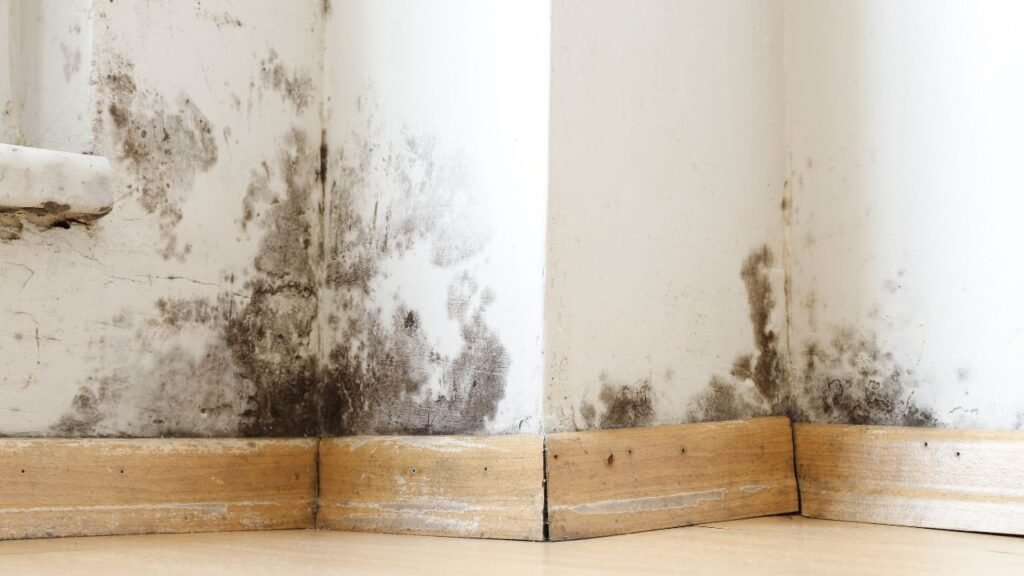
Mold Remediation in Bellaire, TX
In most of the country, a small leak can go unnoticed for a week without much harm. Here, it usually can’t. Houston-area heat and humidity mean mold can start growing on wet drywall, wood and carpet within 24 to 48 hours. Bellaire homes also have their own risk factors: frequent flooding, slab and crawlspace moisture, and air conditioning that runs for most of the year.
We remove mold properly, following Texas law. We contain the area so spores don’t spread, remove what’s contaminated, treat what stays, and fix the moisture problem that caused the mold in the first place.
-
Based on Bellaire Blvd
-
IICRC-certified technicians
-
Licensed & insured
Why Mold Grows So Fast in Bellaire Homes
Mold needs three things to grow: moisture, something to feed on (drywall paper, wood, dust, carpet backing), and warmth. Most homes in Bellaire have all three for much of the year, which is why mold problems here can develop in days instead of weeks.
- Year-round humidity. Houston-area air holds a lot of moisture, so wet drywall, wood and carpet dry slowly on their own. Without professional drying, they can stay damp long enough for mold to take hold.
- Heat. Mold grows fastest in warm conditions, and attics, garages and wall cavities get very warm in summer.
- Past flooding. Homes that flooded before, especially if repairs were rushed, can have leftover moisture or hidden mold behind new drywall.
- Clay soil and concrete slabs. Ground moisture can rise into slab foundations and crawlspaces.
- Air conditioning. AC units, condensate lines and ductwork produce condensation all summer. A clogged AC drain line is one of the most common causes of indoor mold we see.
After a leak or flood, the first 24 to 48 hours usually decide whether you need water damage drying or mold remediation. Fast drying is the best mold prevention there is.
Where Mold Hides in Bellaire Houses
Attic mold
Poor ventilation, roof leaks, and bathroom exhaust fans vented into the attic instead of outside all feed mold on the roof decking. Watch for dark staining on the underside of the roof and a musty smell when you open the attic hatch.
Mold in the AC closet and air handler
Overflowing condensate pans, clogged drain lines and sweating ducts create constant moisture. Mold growing here can spread spores through the whole house every time the system runs.
Mold under kitchen and bathroom sinks
Slow drips from supply lines and drain connections soak into cabinet bottoms and can go unnoticed for months.
Behind the refrigerator and washing machine
Leaking ice-maker lines and washer hoses let water collect out of sight behind appliances.
Bathroom mold
Shower walls, old caulk, the base of the toilet, and ceilings above showers, especially where the exhaust fan is too weak or not used.
Mold inside walls after a flood
If drywall wasn’t cut high enough after a flood, or walls were closed up before the framing was completely dry, mold can grow inside the wall cavity where no one can see it.
Crawlspace mold in pier-and-beam homes
Damp soil and humid air under older pier-and-beam homes can grow mold on floor joists, beams and the subfloor.
Window sills and exterior walls
Condensation, failed window seals, and wind-driven rain getting in around frames can all lead to mold along windows and exterior walls.
Signs of Mold in Your House
A musty smell
An earthy, musty odor, especially when the AC turns on, when you open a cabinet, or on humid days, is often the first sign. Mold can be growing even when you can’t see it.
Visible growth or damage
Black, green, gray or white spots. Stains that keep coming back after cleaning. Bubbling or peeling paint. Baseboards or drywall that feel swollen or soft.
Symptoms at home
Some people react to mold with a stuffy nose, sneezing, itchy eyes, coughing or wheezing. People with asthma, allergies or weakened immune systems may be more sensitive. If symptoms improve when you’re away from home, that can be a clue. Talk to your doctor about any health concerns.
A history of water damage
Any past leak, flood or roof problem that wasn’t professionally dried is worth checking, even if everything looks fine now.
Mold Inspection and Air Quality Testing
A proper mold inspection answers three questions: Is there mold? Where is it, and how much? What caused it?
In Texas, mold assessment is done by a licensed mold assessor who is independent from the remediation company. A typical assessment includes:
- A visual inspection of the likely problem areas
- Moisture readings and thermal imaging to find hidden water sources
- Air quality testing, comparing indoor air samples with an outdoor sample to see whether mold spore levels inside are elevated or unusual
- Surface sampling with a swab or tape lift to identify mold on a specific surface
- A written report with the findings and, for larger jobs, a mold remediation protocol
What mold testing can and can’t tell you
- An air test can show that something is wrong, but it doesn’t always show where the mold is.
- There’s no official “safe” level of mold spores. Results are judged by comparing indoor air with outdoor air and against the assessor’s clearance criteria.
- If you can see the mold and know where the water came from, you may not need extensive testing before cleanup. For larger projects, Texas still requires a written protocol.
Texas Mold Rules: Why Size Matters
Less than 25 contiguous square feet
Smaller mold problems, about a 5-by-5-foot area or less, such as a spot under a sink or a patch on a bathroom ceiling, generally don’t require a written protocol or state notification. We still use containment and proper cleaning methods on small jobs.
25 contiguous square feet or more
This is a regulated mold remediation project in Texas. It requires:
- A written remediation protocol from a licensed Mold Assessment Consultant
- A licensed mold remediation company to do the work
- Notice to the Texas Department of Licensing and Regulation (TDLR) before work begins
- Clearance by the independent assessor once the work is complete
Surface area adds up faster than most people expect. The inside of a sink cabinet, a section of wall and the baseboard below it can pass 25 square feet together, even when the visible mold looks small.
Our Mold Remediation Process, Step by Step
1. Your call
Tell us what you’re seeing or smelling. We’ll ask about past leaks or flooding and roughly how large the affected area is.
You receive: initial guidance and an appointment time.
2. Independent mold assessment
A licensed assessor inspects, tests and, when required, writes the remediation protocol. We help coordinate the appointment.
You receive: the assessment report and, for regulated jobs, the protocol.
3. Containment
We seal the work area with plastic sheeting and zippered entry doors and cover HVAC vents. Then we set up negative air pressure with HEPA air scrubbers, so air flows into the work area instead of carrying spores into the rest of your home.
You receive: photos of the containment setup.
4. Mold removal
Materials that can’t be cleaned, such as moldy drywall, insulation, carpet and pad, are removed and bagged inside containment before they leave the room. Framing and other structural materials that can stay are HEPA-vacuumed and cleaned.
5. Antimicrobial treatment
Cleaned surfaces are treated with an antimicrobial. Where the protocol calls for it, remaining staining on wood framing is sanded or wire-brushed.
6. Drying and fixing the cause
Mold comes back when moisture comes back. We dry the area to normal moisture levels and help pinpoint the fix, whether that’s a plumbing repair, an AC drain line, attic ventilation or a roof leak.
7. Post-remediation clearance testing
Before containment comes down, the independent assessor returns for a visual inspection and clearance testing, usually air samples and sometimes surface samples. If an area doesn’t pass, it’s cleaned again and retested.
You receive: the clearance report.
Mold Removal Myths
“Bleach will kill it.”
Bleach doesn’t fix mold on drywall. Drywall is porous, and mold grows into it, so moldy drywall has to be removed. Bleach can also damage surfaces and release harsh fumes.
“I’ll just paint over it.”
Painting over mold hides it for a while, but doesn’t stop it. Mold-resistant paint is made for clean surfaces, not for covering existing growth.
“Black mold is the only dangerous kind.”
Color doesn’t tell you how harmful a mold is. Many molds are dark. Any significant indoor mold growth should be removed, whatever color it is.
“If it’s dead, it’s harmless.”
Dead mold can still trigger allergic reactions. Contaminated materials have to be removed or cleaned, not just sprayed.
“Once it’s cleaned up, it’s gone for good.”
Only if the moisture problem is fixed. If the leak, condensation or high humidity stays, the mold will come back.
“A fogging treatment takes care of it.”
Fogging or spraying the air doesn’t replace containment, removal and cleaning. It’s not a complete mold remediation on its own.
Preventing Mold After a Flood or Leak
If your home recently flooded or had a leak, the best way to prevent mold is fast emergency water extraction followed by professional structural drying. After floodwater, mold can start growing behind walls, under floors and in insulation within one to two days. See our flood and storm damage restoration page for how contaminated materials are handled.
If your house flooded in the past and was repaired quickly, watch for a musty smell, stains near the bottom of walls, or allergy symptoms that seem to come from inside. Any of these can mean mold is growing inside the walls.
Selling a Bellaire Home After Mold Remediation
Buyers and home inspectors in Bellaire often ask about past flooding and mold. If your home had a regulated mold remediation project, keep the Certificate of Mold Damage Remediation, the assessment report and the clearance report. They show the problem was handled properly. Talk to your real estate agent about what you’re required to disclose.